
Spinifex
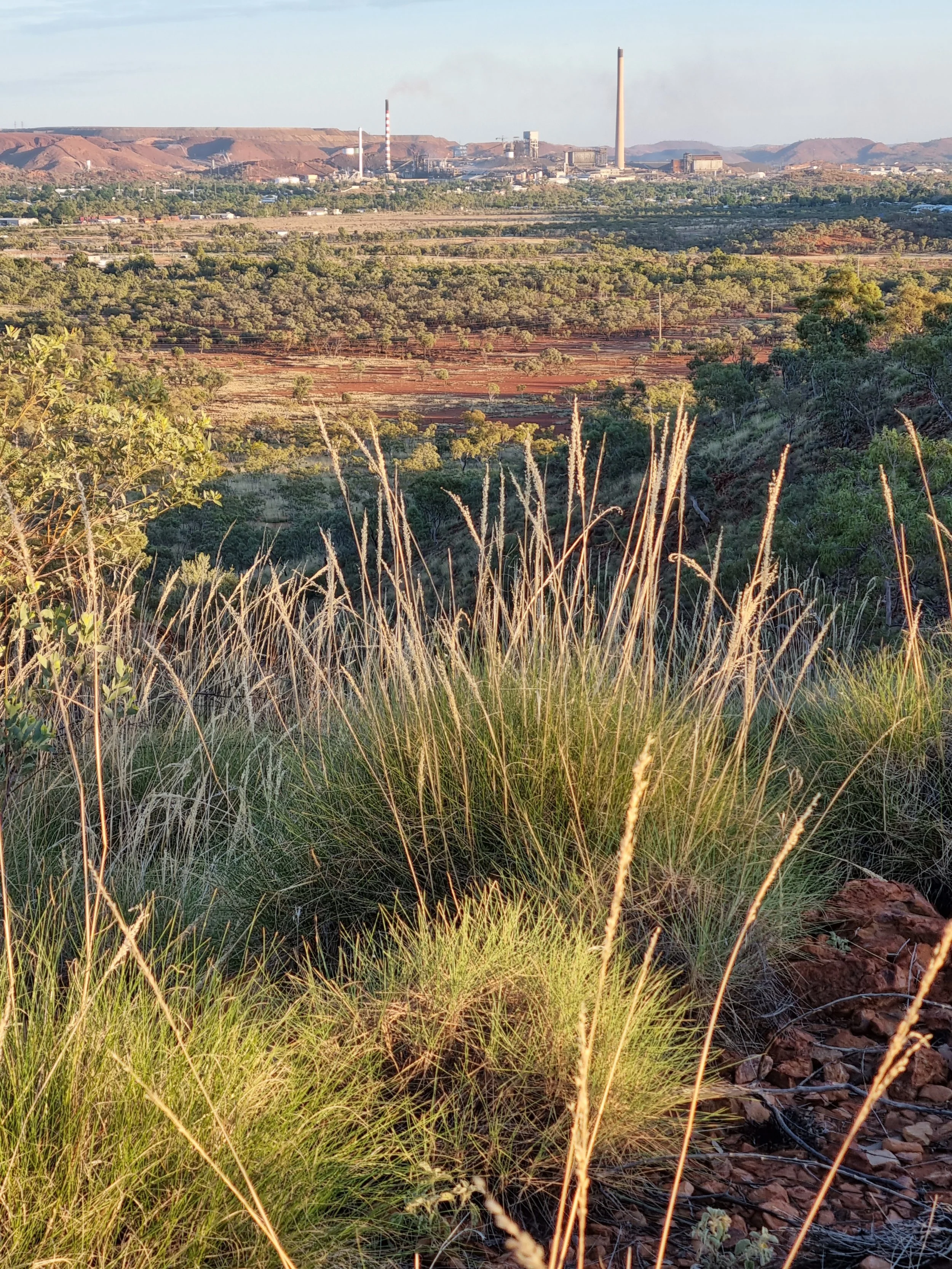
Spinifex with Mount Isa in the background
Today I’m talking about spinifex – that spiky grass that dominates the hills where I live and appears in almost every painting I do of this country.
After a bit of research, I discovered there are over 65 species of spinifex (also called porcupine grass), belonging to the Triodia genus. These grasses can be soft or hard, resinous or non-resinous, and around 12 species occur in the Mount Isa region alone.
Apart from cursing the prickly stuff when you are surrounded by endless clumps of it, spinifex is a remarkably clever plant. It has evolved an ingenious way to survive in a dry, arid climate.
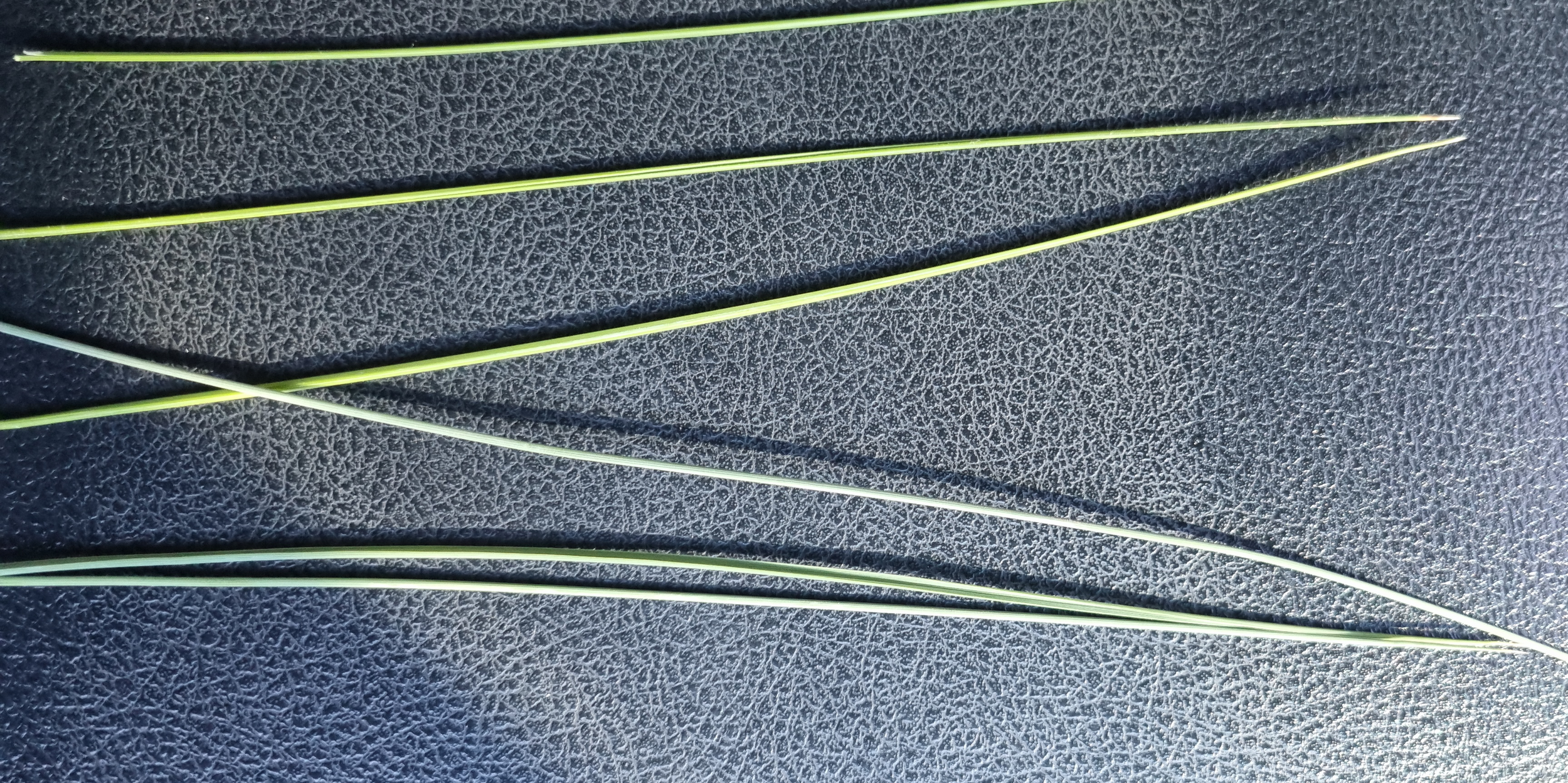
After rain, the new leaves are flat and bright green and are edible to livestock. But as the country dries and the plant matures, the leaves curl in on themselves so tightly they become cylindrical, turning a blue-grey colour. This colour reduces heat absorption, while the silvery spines reflect sunlight. The rounded shape reduces the surface area exposed to the sun, meaning less heat and less water loss. Add a sharp silica spike on the tip to stop animals eating it, and you have a plant built for survival.
Yesterday I picked some fresh, flat leaves and took them away from their water source. In half an hour, I watched them curl themselves into perfect cylinders with no visible joins. Only when it rains do the tussocks send up tall stems – sometimes a metre or more – with seed heads on top. Livestock, especially my horse, love this stage of growth.
Those coarse, spiky clumps also provide refuge for small animals, insects, lizards, snakes and birds. The resinous species were used by Aboriginal people to make a pliable glue for spears and tools. Many a bush mechanic has melted a bit of spinifex resin to seal a leaking radiator or water tank. Early settlers even used it as roofing material to keep rain out.
Spinifex contains nano-cellulose, which gives it its strength and drought resistance. Today it’s being used in modern technology – from stronger latex for thinner condoms to fire-hose linings. Not exactly what you think about when you’re walking through it cursing every step.
It may look hostile, but spinifex is one of the great survivors of the outback – tough, clever, and perfectly adapted to its country.
Endless croshatching lines when I am painting it.
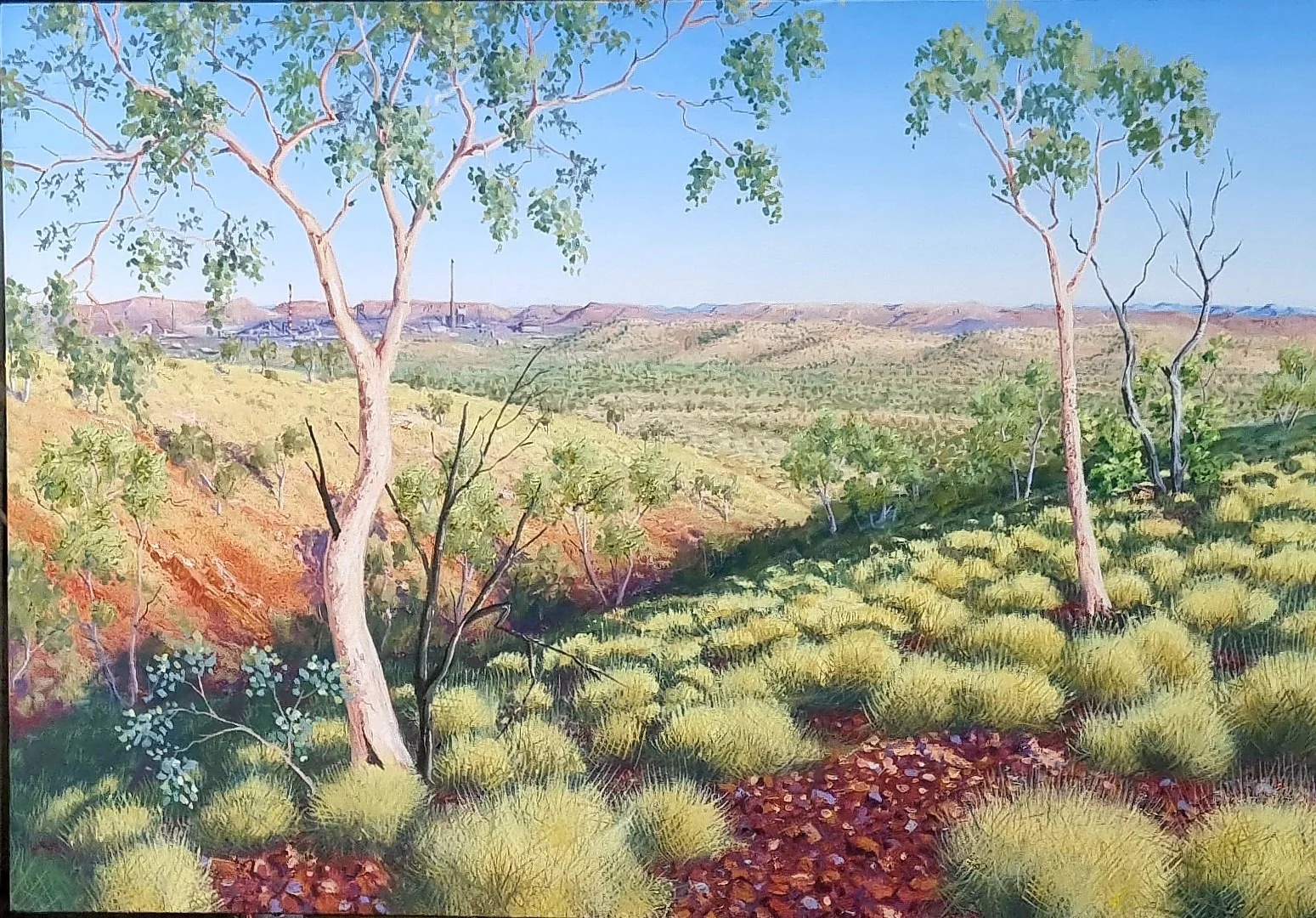
From Telstra Hill
Cheers for this week.
Rowena