Childhood Hunting
Hi everyone, I promised more stories of my childhood, I wrote this story when my children where small so that one day they would understand my strong connection to the bush and my childhood that shaped the person I am.
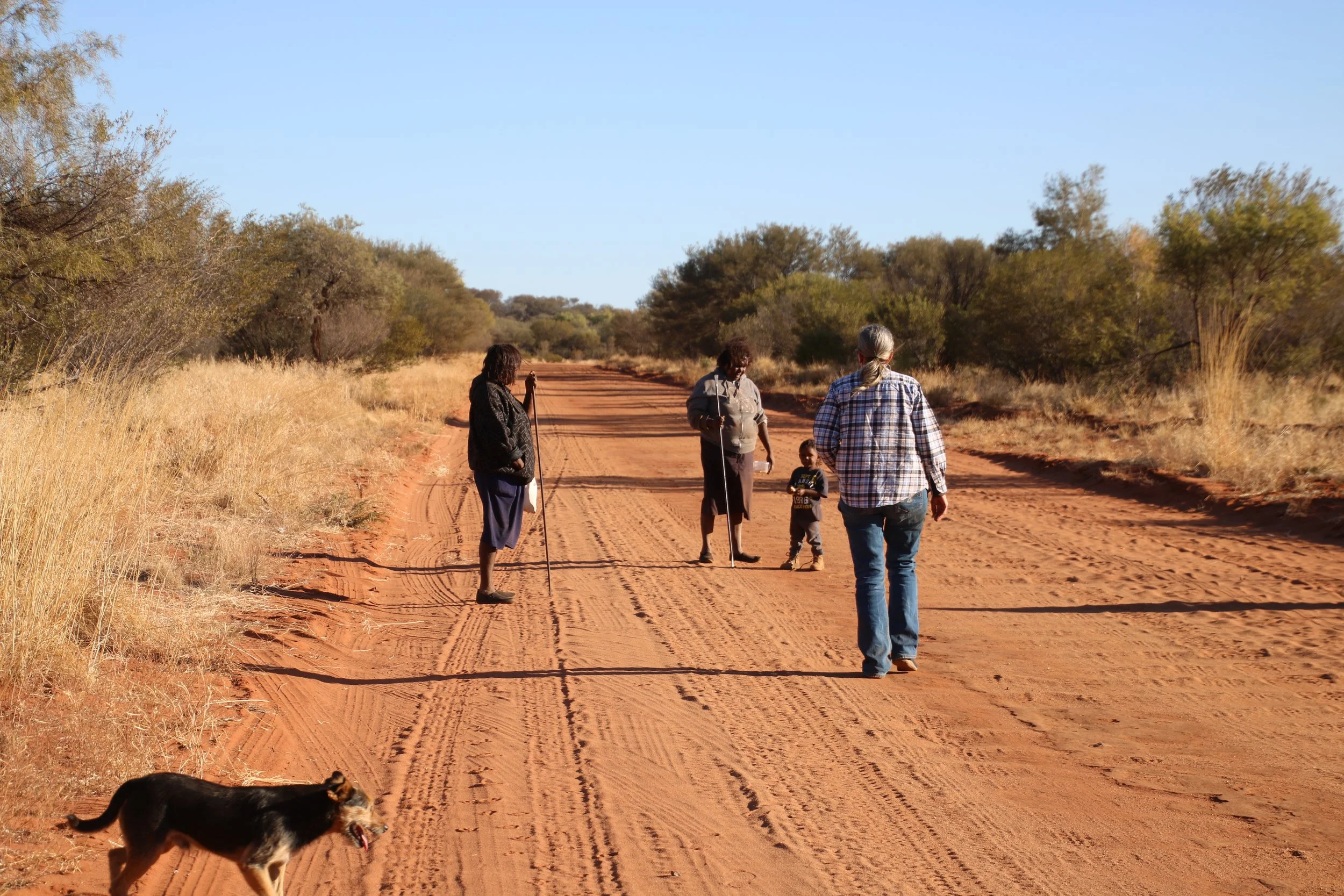
I was about seven the day Ada and Maggie took us hunting. My sisters and I trailed along, barefoot and excited, while the women carried a coolamon, a billy can, a sack, and a digging stick. The coolamon, a shallow long wooden bowl made from a hollowed log, would hold berries or grubs. Sometimes, if it was big enough, it could cradle a newborn baby, balanced easily against the hip. The billy can was just an old tin with a wire handle, but it carried anything and could be used to boil water for tea.
We set off down the creek. It was wide and sandy, only flowing with water in the wet season. After seven years of drought, I had never seen it run full. In the silt and sand grew ulgas — little onions, nutty and sweet. We squatted in the dust, digging them up with our sticks, hands dirty, mouths already watering.
Ada found the tracks of a porcupine — an echidna — and we followed them to a burrow under a big old gum. She began to dig, but just then one of the dogs spotted a goanna. Shouts and laughter erupted as we all tore after it — in and out of the riverbed, scrambling up banks, sliding down again. At last the dogs caught it by the tail. Maggie grabbed it quick as a flash, stuffed it into the sack, and slung it over her shoulder. The hunt was looking good.
When the chase was over, we rested under the cool shade of a white river gum while Ada worked to drag the echidna from its hollow. The leaves of the gum were dotted with little white sticky blobs — sugarleaf, the sweet homes of tiny sap sucking insects. We peeled it off the leaves, filling the billy can with the sticky treat, laughing and talking while we waited.
I wandered along the creek bank and found a wild passionfruit vine heavy with bright orange fruit — and ants. Millions of them. It took quick fingers to pick the fruit and toss it into the coolamon before the ants swarmed up my arms. By the time I came back, the women had found witchetty grubs in a gum branch. They split the wood and, with a hooked bit of wire, teased the fat white grubs out of their holes. Into the coolamon they went. Eaten raw they were squirmy, but roasted on the coals they tasted buttery and nutty.
By now we had quite a haul — a goanna and an echidna in the sack, a coolamon full of grubs and ulgas, and a billy can of sugarleaf, and passionfruit. On the way back home we passed conkerberry bushes heavy with little black berries. We picked them by the handful, probably eating more then went into the Billy.
Back at camp old Tom already had a fire going, with lots of glowing red coals. Ada dug a shallow pit, laid the goanna and echidna on the embers, and shoveled more hot coals on top. While they cooked, we tossed the witchetty grubs onto the fire. They sizzled and spat until the skins crisped and the insides turned golden. With roasted ulgas on the side, they were delicious.
When the meat was ready, Maggie pulled the goanna and echidna from the fire, scraping away the ash. We feasted with our fingers, tearing into the smoky flesh, then washed it down with mugs of black billy tea. Afterward, there were passionfruit, sugarleaf, and berries for dessert.
What a feast it was.
Hope you enjoy these stories I am sharing. With every gum tree I paint, I want you to feel the bond my sisters and I grew up with — a deep connection to the land that shaped me, and now flows through my art to you.
Cheers Rowena
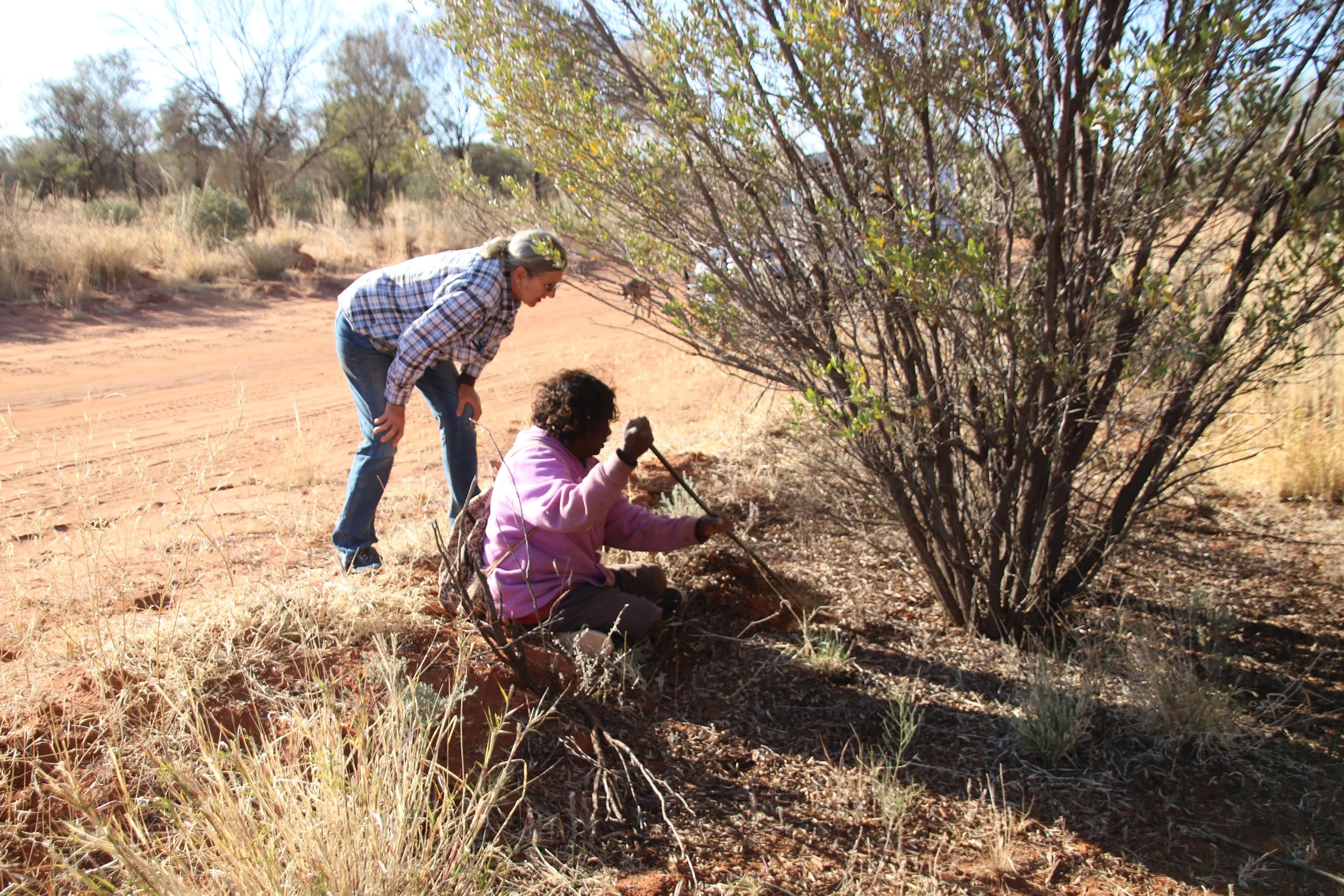
45 years later collecting Witchy Grubs.